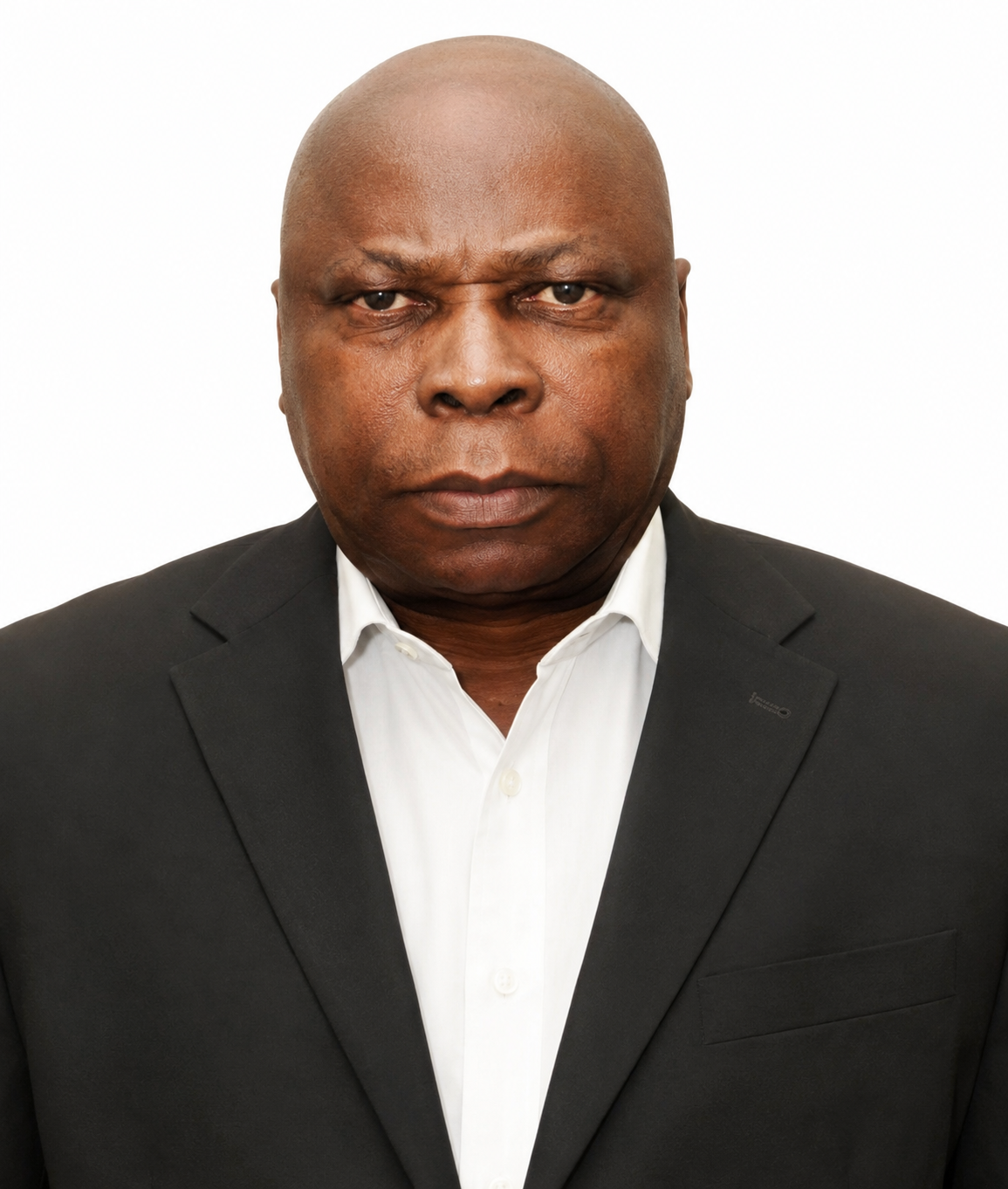
Biography
Early Life and Background
He was born on 29 December 1949 in Uzere, Isoko South Local Government Area of Delta State, Nigeria.
He grew up in the Isoko area and later embarked on a military career that would take him from the Nigerian Defence Academy to the highest professional position in Nigeria's Armed Forces.
Ogomudia's life and career are particularly significant to the people of Uzere and the wider Isoko Nation because he became one of the most senior military officers ever produced from the area.
His professional life has combined military service, engineering, telecommunications, national security, administration and education.
Education
Ogomudia's professional development began with his admission into the Nigerian Defence Academy (NDA) in 1969 as a member of the 7th Regular Course.
He was subsequently commissioned into the Nigerian Army Signal Corps in 1972.
His military career was supported by extensive professional and academic education. He undertook specialised training in Nigeria and abroad, including courses related to military signals, communications, command and strategic leadership.
His training included the Signal Officers Basic Course in the United States, the Signals Officers' Degree Engineer Course in India, the Battalion Commanders' Course at Jaji, and the National War College Course in Lagos.
He also pursued studies in Electrical and Electronics Engineering, strengthening his technical expertise in telecommunications and military communications.
His academic and professional qualifications include an MSc and the designation Fellow of the Nigerian Society of Engineers (FNSE).
Beginning of His Military Career
Ogomudia's military career began in the technical field.
After his commissioning into the Nigerian Army Signal Corps, he served in positions connected with military communications, operations and training.
His early career gave him extensive exposure to the importance of reliable communications in military operations.
He subsequently rose through a series of command, staff and technical appointments, developing expertise in signals, telecommunications, engineering and military administration.
His technical background distinguished him from many officers whose careers were primarily based in conventional combat arms.
Career in the Nigerian Army Signals
The Nigerian Army Signals became one of the most important foundations of Ogomudia's professional career.
He held several appointments within the Signals establishment, including responsibilities involving telecommunications and military communications.
He served as Commanding Officer of 510 Signal Regiment, Kaduna, and later occupied senior positions at Army Headquarters.
He also served as Director of Telecommunications, Colonel Co-ordination in the Nigerian Army Signals, and Deputy Commandant and Commandant of the Nigerian Army Signals and School.
These appointments enabled him to combine his military responsibilities with his engineering and technological expertise.
His work in signals was particularly important because military communications form the backbone of command and control, allowing commanders and formations to coordinate operations effectively.
Service as a Military Instructor
Ogomudia also contributed to the professional education of Nigerian military officers.
He served as a Directing Staff at the Command and Staff College and later at the National War College.
These institutions play important roles in preparing officers for higher command and strategic responsibilities.
His involvement in military education meant that his influence extended beyond the units he commanded. He participated in the training and development of officers who would subsequently assume senior responsibilities within Nigeria's Armed Forces.
Rise Through the Military Ranks
Ogomudia progressed steadily through the hierarchy of the Nigerian Army.
He advanced from Second Lieutenant through the ranks of Lieutenant, Lieutenant Colonel, Colonel, Brigadier General and Major General before becoming Lieutenant General and eventually General.
His progression reflected decades of military service and increasingly greater responsibilities.
By the late 1990s, he had moved from specialised technical appointments into major command and strategic leadership positions.
General Officer Commanding 1 Mechanized Division
One of the important stages of Ogomudia's military career was his appointment as General Officer Commanding 1 Mechanized Division, Nigerian Army.
He assumed command of the formation in 1999.
Command of a major Army division represented a significant transition from specialist and staff responsibilities to high-level operational command.
The appointment demonstrated the confidence placed in his leadership abilities and prepared him for the senior appointments that followed.
Chief of Army Staff
In 2001, Ogomudia reached one of the highest positions in the Nigerian Army when he was appointed Chief of Army Staff.
He served in the position from 2001 to 2003.
As Chief of Army Staff, he was responsible for the administration, organisation, training and operational readiness of the Nigerian Army.
His tenure occurred during an important period in Nigeria's democratic history, when the Armed Forces were adapting to the requirements of a new era of democratic governance while continuing to respond to internal and external security challenges.
His experience in command, engineering, communications and military administration provided him with a broad professional foundation for the role.
Chief of Defence Staff
In 2003, Ogomudia was appointed Chief of Defence Staff of Nigeria.
He served in that position until 2006.
The Chief of Defence Staff is the highest-ranking professional officer in Nigeria's Armed Forces and has responsibility for coordinating the country's military services at the strategic level.
As CDS, Ogomudia was responsible for overseeing the coordination of the Nigerian Army, Nigerian Navy and Nigerian Air Force within the broader national defence structure.
His appointment marked the culmination of more than three decades of military service.
The Niger Delta and the Ogomudia Report
An important chapter of Ogomudia's public career concerns the security challenges of the Niger Delta.
Because he was born in Uzere, an oil-producing community in Delta State, his connection to the region was both personal and professional.
He chaired the Special Security Committee on Oil Producing Areas, which examined the causes of unrest and insecurity in Nigeria's oil-producing communities.
The committee's findings became associated with the Ogomudia Report.
The report formed part of the national response to the growing security challenges in the Niger Delta and examined the relationship between security, development, community grievances and petroleum operations.
The work was significant because the problems of the Niger Delta could not be addressed purely as military problems. They were also connected to economic development, environmental concerns, resource control, employment, community expectations and relations between oil-producing communities and government.
Retirement from the Military
After a distinguished military career spanning more than three decades, Ogomudia retired from the Nigerian Army in 2006.
His retirement marked the end of his active military service but not the end of his public career.
Instead, he moved increasingly into institutional leadership, education and public affairs.
The experience he had acquired through military command and administration subsequently became valuable in his work outside the Armed Forces.
Life After Military Service
Following his retirement, Ogomudia continued to participate in public and institutional affairs.
He became involved in university governance and other activities requiring strategic leadership and administration.
His post-military career demonstrates a transition from national defence to broader public service.
Rather than limiting his activities to military affairs, he became increasingly involved in education and the development of human capacity.
Role in University Administration
Ogomudia later became Pro-Chancellor and Chairman of the Governing Council of Delta State University, Abraka.
The appointment placed him in a major leadership role within the Nigerian university system.
As Pro-Chancellor, he became involved in the governance and strategic direction of the institution.
His responsibilities included working with the university's management and governing structures on issues concerning institutional development, administration and the advancement of higher education.
His involvement in university administration represents an important second phase of his public service.
Commitment to Education
Education has become an increasingly important theme in Ogomudia's later public life.
His transition from the military into university governance reflects his belief in the importance of institutions and human capital to national development.
His perspective is particularly relevant to the Niger Delta, where the region's enormous petroleum resources have not always translated into sustainable development for its communities.
Ogomudia has therefore increasingly emphasised the need to invest in people and institutions rather than relying exclusively on natural resources.
Beyond Oil and the Future of the Niger Delta
In 2026, Ogomudia delivered a significant lecture titled "Beyond Oil: The University and the Future of the Niger Delta."
The lecture reflected his broader thinking about the future of the region.
He argued that the Niger Delta must look beyond petroleum and place greater emphasis on education, knowledge, technology, leadership, institutions and human capital.
His message was particularly significant because of his personal background in Uzere and his professional involvement in the security challenges of the oil-producing areas.
Having served at the highest levels of Nigeria's security establishment, he has experienced the consequences of instability in resource-producing communities. His later emphasis on education and human capital therefore represents a broader approach to addressing the underlying challenges of the region.
Engineering and Professional Identity
Despite becoming one of Nigeria's most senior military commanders, Ogomudia retained a strong connection to engineering and technology.
His early career in the Army Signals was based on communications and telecommunications, while his academic training included Electrical and Electronics Engineering.
His professional recognition as a Fellow of the Nigerian Society of Engineers further reflects his standing within the engineering profession.
His career demonstrates the relationship between technical expertise and military leadership.
The communications systems on which modern military operations depend require specialised technical knowledge, and Ogomudia spent a significant part of his early and middle career working in this field.
Connection to Uzere
Uzere occupies an important place in Ogomudia's life.
It is his birthplace and the community from which he emerged before embarking on his national career.
His eventual rise to Chief of Army Staff and Chief of Defence Staff brought national recognition to his community and the wider Isoko Nation.
His later interest in the development of the Niger Delta has also kept his connection to the region prominent.
Uzere itself is an oil-producing community, making Ogomudia's work on Niger Delta security and his later advocacy for development beyond oil particularly relevant to his roots.
Connection to the Isoko Nation
General Ogomudia is regarded as one of the prominent sons of the Isoko Nation.
His military career took him to the highest professional levels of Nigeria's Armed Forces, while his later work in education and public affairs continued to connect him with Delta State and the Niger Delta.
His career is frequently regarded as a source of pride within the Isoko community because of the level of national responsibility he attained.
His journey from Uzere to the Nigerian Defence Academy and ultimately to the position of Chief of Defence Staff represents a notable chapter in the history of the Isoko people.
Family Life
General Ogomudia is married and has five children.
He has generally maintained a relatively private family life, and most publicly available information about him focuses on his professional career and public responsibilities.
His family has nevertheless formed an important part of his life outside his demanding military and administrative career.
Personal Interests
Away from his professional responsibilities, Ogomudia has been associated with interests in music, farming and engineering design.
These interests provide another dimension to his personality beyond military command and administration.
His interest in farming is particularly relevant to the broader question of economic diversification in Nigeria, where agriculture remains an important source of employment and economic opportunity.
Honours and Recognition
Ogomudia's long career has earned him several military, national and professional distinctions.
Among the honours and qualifications associated with his name are:
Commander of the Order of the Federal Republic (CFR)
Distinguished Service Star (DSS)
Passed Staff College (psc)
Fellow of the War College (fwc)
Master of Science (MSc)
Fellow of the Nigerian Society of Engineers (FNSE)
These distinctions reflect different stages of his career and his achievements in military service, professional development and engineering.
A Career of National Service
The career of General Alexander Ogomudia can be viewed as a progression through several distinct stages.
He began as a young military cadet and developed into a specialist in communications and engineering. He subsequently became a military instructor, commander, General Officer Commanding, Chief of Army Staff and finally Chief of Defence Staff.
After leaving the military, he transitioned into university governance and broader public service.
This progression demonstrates the breadth of his professional experience.
His career has allowed him to contribute to Nigeria in different capacities, from military communications and national defence to education and regional development.
Later Public Life
In his later years, Ogomudia has remained active in public discussions about Nigeria and particularly the Niger Delta.
His interventions increasingly focus on the relationship between education, institutions, human capital and sustainable development.
His argument that the Niger Delta must prepare for a future beyond oil reflects changing economic and environmental realities.
For a region whose modern history has been profoundly shaped by petroleum, the transition toward education, technology and diversified economic opportunities represents one of the most important development questions of the twenty-first century.
Ogomudia's later public engagements have therefore extended the scope of his contribution from security to long-term development.
Legacy
General Alexander Odeareduo Ogomudia's legacy is built on a long and varied career.
He is remembered first as a senior Nigerian military officer who rose to become Chief of Army Staff and Chief of Defence Staff.
He is also recognised for his technical expertise in military communications and engineering, his involvement in addressing Niger Delta security challenges and his contribution to military education.
His post-retirement career has added another dimension to his legacy through university governance and advocacy for education and human-capital development.
For the people of Uzere and the Isoko Nation, his journey from a local community in Delta State to the highest levels of Nigeria's military establishment remains a significant achievement.
For Nigeria, his career represents more than three decades of military service followed by continued engagement in education, governance and national development.
Conclusion
General Alexander Odeareduo Ogomudia, CFR, DSS, fwc, psc(+), MSc, FNSE (Rtd.), born on 29 December 1949 in Uzere, Delta State, has built a distinguished career spanning military service, engineering, national security, education and public administration.
From his entry into the Nigerian Defence Academy in 1969, his commissioning into the Nigerian Army Signals in 1972, and his subsequent rise through the ranks, he established himself as a technically skilled and experienced military officer.
His appointments as General Officer Commanding 1 Mechanized Division, Chief of Army Staff and Chief of Defence Staff marked the highest points of his military career.
His involvement in the Special Security Committee on Oil Producing Areas further connected his career with the history and security challenges of the Niger Delta.
Following his retirement in 2006, he continued his public service through university governance and education. His work and public interventions have increasingly focused on developing human capital and creating a sustainable future for the Niger Delta beyond dependence on oil.
From military communications to national defence, from the security of the Niger Delta to university leadership, General Ogomudia's life reflects a continuing commitment to service.
His story remains an important part of the history of Uzere, the Isoko Nation, Delta State and Nigeria.
Achievements
His achievements span military leadership, engineering, national security, strategic defence administration, Niger Delta affairs, education and institutional governance.
1. Became Chief of Army Staff
One of General Ogomudia's greatest achievements was his appointment as Chief of Army Staff (COAS) on 1 April 2001.
Before reaching the position, he had accumulated extensive experience in command, military communications, engineering and strategic administration. He had also served as General Officer Commanding 1 Mechanized Division, one of the Nigerian Army's major formations.
As Chief of Army Staff, he became responsible for the leadership and administration of the Nigerian Army at one of the country's important periods of democratic transition.
His appointment represented the culmination of more than three decades of military service.
2. Became Chief of Defence Staff of Nigeria
The highest point of his military career came when he was appointed Chief of Defence Staff (CDS).
He served as Chief of Defence Staff from 9 June 2003 to 1 June 2006. The Nigerian Defence Headquarters officially lists him as the 9th Chief of Defence Staff.
As CDS, General Ogomudia occupied the highest professional military position in Nigeria and was responsible for the strategic coordination of the nation's Armed Forces.
His elevation from Chief of Army Staff to Chief of Defence Staff placed him among the small group of Nigerian military officers who have held both of these senior appointments.
3. Rose from a Signals Officer to the Highest Military Command
Ogomudia's career is particularly remarkable because of its technical origins.
He entered the Nigerian Defence Academy as a cadet in 1969 and was commissioned into the Nigerian Army Signal Corps as a Second Lieutenant in 1972.
Rather than beginning his career in a conventional infantry command role, he developed his expertise in military communications, telecommunications and engineering.
Over the following decades, he progressed through increasingly senior appointments until he reached the highest levels of Nigeria's military establishment.
His career therefore demonstrates the possibility of combining technical expertise with operational command and strategic leadership.
4. Distinguished Military Engineering and Telecommunications Career
General Ogomudia built a significant professional reputation in military communications.
Among the appointments recorded in his official biography are:
- Commander, 53 Signals Regiment;
- Director of Telecommunications, Headquarters Nigerian Army Signals;
- Colonel Co-ordination, Headquarters Nigerian Army Signal;
- Deputy Commandant, Nigerian Army Signals and School;
- Commandant, Nigerian Army Signals and School;
- Directing Staff, Command and Staff College;
- Directing Staff, National War College; and
- General Officer Commanding 1 Mechanized Division.
These appointments demonstrate the breadth of his experience in communications, training, technology, administration and military command.
5. Advanced Professional and Academic Training
Another major achievement was his continued pursuit of professional education.
During his military career, Ogomudia attended several courses in Nigeria and abroad, including the Signal Officers Basic Course in the United States, the Signals Officers' Degree Engineer Course in India, the Battalion Commanders' Course at Jaji, and the National War College Course in Lagos.
He also studied Electrical and Electronics Engineering, giving him a strong technical foundation that complemented his career in military signals and telecommunications.
His professional qualifications include MSc and FNSE ÃÂâÃÂÃÂÃÂàFellow of the Nigerian Society of Engineers.
6. Commanded 1 Mechanized Division
Before becoming Chief of Army Staff, Ogomudia served as General Officer Commanding 1 Mechanized Division Nigerian Army.
This was one of the most important field-command positions of his career and demonstrated the confidence placed in him to command a major formation of the Nigerian Army.
His appointment to the position preceded his elevation to Chief of Army Staff in 2001.
7. Chaired the Special Security Committee on Oil-Producing Areas
General Ogomudia also became associated with one of the important national efforts to understand insecurity in Nigeria's oil-producing communities.
He chaired the Special Security Committee on Oil Producing Areas, whose work became associated with the Ogomudia Report.
The report examined security problems in the oil-producing areas and contributed to the national discussion about the causes of unrest in the Niger Delta and possible responses to the region's security and development challenges.
This became one of the most significant parts of Ogomudia's contribution to the national conversation on the Niger Delta.
8. Contributed to Understanding Niger Delta Security Challenges
Ogomudia's connection to the Niger Delta has particular significance because he was himself born in Uzere, an oil-producing community in Delta State.
His work on the security situation in oil-producing areas therefore placed him at the intersection of his professional military experience and the realities of the region from which he originated.
The issues examined during this period included the relationship between oil-producing communities, government, petroleum companies and security institutions.
His work contributed to the body of national thinking surrounding the Niger Delta's security challenges.
9. Became a Recipient of the CFR
General Ogomudia has been recognised with the Nigerian national honour Commander of the Order of the Federal Republic (CFR).
He also bears several military and professional distinctions, including DSS, fwc, psc(+), MSc and FNSE.
These distinctions reflect recognition of his military service, professional training and contribution to national life.
10. Became a Fellow of the Nigerian Society of Engineers
His engineering background is another significant achievement.
Ogomudia's career in military signals and telecommunications was supported by formal engineering education, and he attained the professional distinction of Fellow of the Nigerian Society of Engineers (FNSE).
This is particularly notable because it reflects achievement beyond military command and demonstrates his standing within Nigeria's engineering profession.
11. Contributed to Military Training and Professional Development
Throughout his career, Ogomudia held several appointments connected with military education and professional training.
He served as a Directing Staff at the Command and Staff College and later at the National War College. He also served as Commandant of the Nigerian Army Signals and School.
These positions allowed him to contribute to the professional development of other officers and to the training of personnel who would subsequently serve in Nigeria's Armed Forces.
His contribution therefore extended beyond his own command positions to the development of military human capital.
12. Became Pro-Chancellor of Delta State University
Following his military career, Ogomudia transitioned into institutional and educational leadership.
He became Pro-Chancellor and Chairman of the Governing Council of Delta State University, Abraka (DELSU). The university's official profile identifies him in this position and highlights his military and professional background.
This represents an important second phase of his public career.
After decades of serving in the Armed Forces, he continued to contribute to society through higher-education governance and institutional leadership.
13. Contributed to Higher Education Governance
As Pro-Chancellor and Chairman of the Governing Council of DELSU, Ogomudia has participated in the governance and strategic oversight of one of Delta State's major public universities.
His transition into university governance demonstrates the application of his experience in leadership, administration, strategic planning and institutional management beyond the military.
It also reflects his continuing interest in developing human capacity.
14. Promoted Education as a Tool for Niger Delta Development
Ogomudia's later public work has increasingly focused on the relationship between education and development.
In 2026, he delivered a major lecture titled ÃÂâÃÂÃÂÃÂÃÂBeyond Oil: The University and the Future of the Niger Delta.ÃÂâÃÂÃÂÃÂÃÂ
The subject reflects his broader concern about the future of the region and the need to move beyond dependence on petroleum resources.
His message emphasised the importance of education, knowledge, leadership, institutions and human capital in creating sustainable development in the Niger Delta.
15. Advocated Development Beyond Oil
One of Ogomudia's most significant contemporary contributions is his advocacy for a development model that looks beyond petroleum.
As someone born in an oil-producing community and who later worked at the highest levels of national security, his perspective brings together two major dimensions of the Niger Delta experience: natural resources and human security.
His ÃÂâÃÂÃÂÃÂÃÂBeyond OilÃÂâÃÂÃÂÃÂàmessage stresses that natural resources alone cannot guarantee prosperity and that the region must invest in people, institutions, knowledge and innovation.
16. Became an Important Public Voice from Isoko
General Ogomudia's rise to the highest levels of Nigeria's military establishment made him one of the most prominent figures associated with the Isoko people.
His journey from Uzere to the Nigerian Defence Academy, and ultimately to Chief of Defence Staff, represents a notable achievement in the history of the community.
His continued involvement in Delta State University and Niger Delta development has further maintained his connection with the region.
17. Promoted Engineering and Technical Knowledge
Ogomudia's professional life demonstrates the importance of technical education within national leadership.
His early military career was built around signals and telecommunications, while his academic background included Electrical and Electronics Engineering.
His continued interest in engineering design is also recorded among his personal interests.
His career therefore represents an intersection of military leadership, engineering, technology and administration.
18. Built a Career Spanning More Than Three Decades
General Ogomudia served in the Nigerian Army from his entry into the Nigerian Defence Academy in 1969 until his voluntary retirement in 2006.
That represents roughly 37 years of military service.
During that period, he progressed from cadet to Second Lieutenant, Lieutenant, Lieutenant Colonel, Colonel, Brigadier General, Major General, Lieutenant General and ultimately General.
The Nigerian Defence Headquarters records his retirement as taking effect on 1 June 2006.
19. Combined Military Leadership with Civilian Institutional Leadership
Perhaps one of Ogomudia's most notable achievements after retirement has been his ability to transfer his experience from military command into civilian institutional leadership.
His service as Pro-Chancellor of Delta State University demonstrates that his public career did not end when he left the Armed Forces.
Instead, his experience has continued to be applied to education, governance and strategic development.
20. Became a Model of Professional Military Advancement
Ogomudia's career is also significant as an example of professional advancement within Nigeria's military.
He entered the Nigerian Defence Academy as a young cadet, developed expertise in a specialised technical field, occupied increasingly senior command and staff appointments, commanded a major Army division, became Chief of Army Staff and ultimately Chief of Defence Staff.
His career demonstrates the combination of professional military training, technical expertise, leadership, discipline and strategic responsibility.
Contribution
Contribution to Nigeria's Defence and National Security
One of General Ogomudia's greatest contributions was his service at the highest levels of Nigeria's defence establishment.
After rising through various command and staff positions in the Nigerian Army, he became Chief of Army Staff and subsequently Chief of Defence Staff. As Chief of Defence Staff, he was responsible for the strategic coordination of Nigeria's Armed Forces, including the Army, Navy and Air Force.
His service at this level contributed to the country's defence administration, military coordination and national security during an important period in Nigeria's democratic development.
Contribution to Military Communications and Technology
General Ogomudia's contribution to the Nigerian Army began in the technical field.
Commissioned into the Nigerian Army Signal Corps, he developed specialised expertise in military communications, telecommunications, electronics and engineering.
He subsequently held several important appointments within the Signals establishment, including senior responsibilities in telecommunications and the Nigerian Army Signals and School.
His technical career contributed to the development of professional expertise in military communications and demonstrated the importance of technology in modern military operations.
His academic training in Electrical and Electronics Engineering further strengthened this contribution.
Contribution to Military Training and Professional Development
Ogomudia played an important role in the education and professional development of Nigerian military officers.
He served as a Directing Staff at the Command and Staff College and at the National War College, as well as Commandant of the Nigerian Army Signals and School.
These positions placed him in a position to train, mentor and prepare officers for command and strategic responsibilities.
His contribution to military education therefore extended beyond his own career to the development of other officers who would serve in Nigeria's security institutions.
Contribution to Strategic Defence Leadership
As both Chief of Army Staff and Chief of Defence Staff, Ogomudia contributed to strategic thinking within Nigeria's Armed Forces.
His experience across technical, operational and command positions gave him an understanding of the military from several perspectives.
His career moved from communications and engineering to field command and eventually to the highest level of defence administration.
This breadth of experience was particularly valuable in coordinating military responses to Nigeria's complex security environment.
Contribution to Addressing Niger Delta Security Challenges
One of General Ogomudia's most important contributions outside conventional military command was his involvement in addressing insecurity in Nigeria's oil-producing areas.
He chaired the Special Security Committee on Oil Producing Areas, whose work became associated with the Ogomudia Report.
The report examined the security situation in the Niger Delta and considered the underlying problems contributing to unrest in the region.
Its significance lies in its recognition that security challenges in the Niger Delta could not be viewed solely as military problems. They were connected to wider questions involving development, resource control, community grievances, environmental concerns and the relationship between oil-producing communities, government and petroleum companies.
Contribution to the Niger Delta
Ogomudia's connection to the Niger Delta is particularly significant because he was born in Uzere, Isoko South Local Government Area of Delta State, an oil-producing community.
His professional involvement with Niger Delta security therefore gave him an opportunity to contribute to issues affecting the region from both a national-security and regional perspective.
His work has helped keep attention focused on the relationship between security and development in oil-producing communities.
Contribution to Peace and Stability
Through his work on the security situation in the Niger Delta, Ogomudia contributed to national efforts to understand and address the sources of instability in the region.
The issues surrounding the Niger Delta involve numerous stakeholders, including communities, traditional institutions, government agencies, security organisations and oil companies.
His work helped place these complex relationships within the broader framework of national security and public policy.
Contribution to Engineering
Engineering has remained an important part of Ogomudia's professional identity.
His early military career was built around signals and telecommunications, while his academic development included Electrical and Electronics Engineering.
He subsequently became a Fellow of the Nigerian Society of Engineers (FNSE).
His career demonstrates how engineering knowledge can be applied to national defence, communications, infrastructure and strategic management.
His contribution to engineering is therefore not limited to professional qualification; it is reflected in the application of technical knowledge throughout his military career.
Contribution to Education
After retiring from the Nigerian Army, General Ogomudia continued to contribute to society through education.
He became involved in university administration and served as Pro-Chancellor and Chairman of the Governing Council of Delta State University, Abraka.
Through this role, he brought his experience in leadership, administration, strategic planning and institutional management into the higher-education sector.
His transition from military leadership to university governance represents an important continuation of his public service.
Contribution to University Governance
As a university governing council chairman, Ogomudia has participated in the strategic oversight of a major Nigerian public university.
University governance requires decisions concerning academic development, institutional administration, infrastructure, finances, staff and students.
His involvement has therefore provided another avenue through which he has contributed to human-capital development in Delta State.
Contribution to Human Capital Development
In his later public life, Ogomudia has increasingly emphasised the importance of human capital as the foundation of sustainable development.
His position is particularly relevant to the Niger Delta, where natural resources have historically dominated the region's economy.
His advocacy for education and skills development reflects the view that the region's long-term prosperity should depend not only on petroleum but also on the knowledge, abilities and creativity of its people.
Contribution to the Development of the Niger Delta Beyond Oil
A major theme of Ogomudia's recent public interventions has been the need for the Niger Delta to look beyond oil.
In his 2026 lecture, "Beyond Oil: The University and the Future of the Niger Delta," he emphasised the importance of universities, knowledge, leadership, institutions and human capital in determining the region's future.
His message represents a significant contribution to the development debate in the Niger Delta because it shifts attention from simply sharing petroleum wealth toward building the human and institutional capacity necessary for sustainable development.
Contribution to Youth and Future Generations
Ogomudia's emphasis on education and human capital also represents a contribution to younger generations.
Through his involvement in higher education and public lectures, he has encouraged greater attention to knowledge, professional development and institutional capacity.
His message is that the future of the Niger Delta should be shaped by educated and skilled people capable of creating opportunities beyond traditional dependence on natural resources.
Contribution to Delta State
As a native of Delta State and a senior figure in national military and educational affairs, Ogomudia has maintained a strong connection with the state.
His service at Delta State University has provided an additional platform for contributing to the state's educational development.
His prominence has also brought national recognition to the state and to the Isoko area from which he originates.
Contribution to the Isoko Nation
General Ogomudia is one of the most prominent individuals to emerge from the Isoko Nation.
His rise from Uzere to the highest levels of Nigeria's military establishment represents an important achievement for his community.
His subsequent involvement in education, Niger Delta development and public affairs has continued to give him a role in the wider development of the Isoko people.
He stands as an example of the contribution that individuals from the Isoko community have made to Nigeria's national institutions.
Contribution to Uzere
Ogomudia's birthplace, Uzere, is an oil-producing community whose history is closely connected with the wider challenges of the Niger Delta.
His national career has brought recognition to the community, while his later involvement in Niger Delta issues has given him an opportunity to speak from the perspective of someone with personal roots in an oil-producing area.
His life and career have consequently become part of the modern history and identity of Uzere.
Contribution to Public Administration
Ogomudia's career has also demonstrated the transferability of military leadership skills to civilian institutions.
Military service required discipline, strategic planning, organisational management, decision-making and accountability.
He subsequently applied many of these skills to university governance and other public responsibilities.
His post-retirement career therefore represents a contribution to public administration beyond the Armed Forces.
Contribution to National Development
General Ogomudia's contribution to Nigeria ultimately extends across several interconnected areas.
His military service contributed to national defence; his engineering career contributed technical expertise; his work on oil-producing areas contributed to national understanding of Niger Delta security; and his university leadership contributed to education and institutional development.
His more recent advocacy for human capital and development beyond oil adds another dimension to his public service.